The key principles are simple
September 2026
How to Travel to the Democratic Republic of Congo: A First-Time Guide
Start With the Route, Not the Flight
One of the first mistakes travelers make is treating the DRC as though it were a single destination.
It is one of Africa’s largest countries. Distances are enormous, transport infrastructure varies dramatically and traveling between regions can be considerably more complicated than the map suggests.
Before booking international flights, decide which part of the country you actually want to experience.
A journey focused on Kinshasa and the western Congo will look completely different from an expedition through southern DRC, the Congo River basin or another remote region.
- Which regions do I want to visit?
- How much time do I have?
- Am I looking for cities, culture, wildlife, river travel or an expedition?
- How comfortable am I with long travel days and basic infrastructure?
- Will domestic flights be necessary?
- Am I traveling privately or with organized local support?
Do You Need a Visa for the DRC?
Most foreign visitors need a visa to enter the Democratic Republic of Congo.
The Congolese Ministry of Foreign Affairs states that visa applications should be submitted through the DRC embassy or consulate responsible for the applicant’s country of residence. Exact documentation and procedures can differ between diplomatic missions.
Depending on the application and consulate, supporting documents may include items such as:
- a valid passport
- completed visa application
- passport photographs
- proof of travel arrangements
- accommodation information
- an invitation or supporting letter
- evidence concerning the purpose of the journey
Do not assume that requirements published for one embassy automatically apply everywhere.
Visa procedures can change, so check the relevant Congolese diplomatic mission before applying.
For journeys arranged with Congo Local Guides, visa and entry coordination can be discussed as part of the planning process.
How Far in Advance Should You Plan?
For a straightforward city visit, planning may be relatively simple. For an expedition involving several provinces, domestic flights, river transport, permits or remote communities, it is wise to begin much earlier.
Several parts of the process can require lead time:
- visas
- domestic transport
- permits
- hotel reservations
- local access
- vehicles
- river transport
- guides and fixers
- community coordination
Travel in the DRC rewards flexibility, but good preparation reduces unnecessary uncertainty.
For complex itineraries, think in terms of months rather than days.
Flying to the Democratic Republic of Congo
Kinshasa is the country’s principal international gateway.
Most international travelers arrive through N’Djili International Airport and continue either into Kinshasa or onward to another region.
Lubumbashi is another important gateway for southern DRC. Depending on the itinerary, domestic flights may connect travelers with cities such as Kisangani, Mbandaka or other regional centers.
Domestic aviation should not be treated in the same way as a tightly scheduled European flight network. Timetables can change, delays occur and operational conditions may affect routes.
Build flexibility into your itinerary, particularly when a domestic flight connects directly with an international departure.
The Congo River
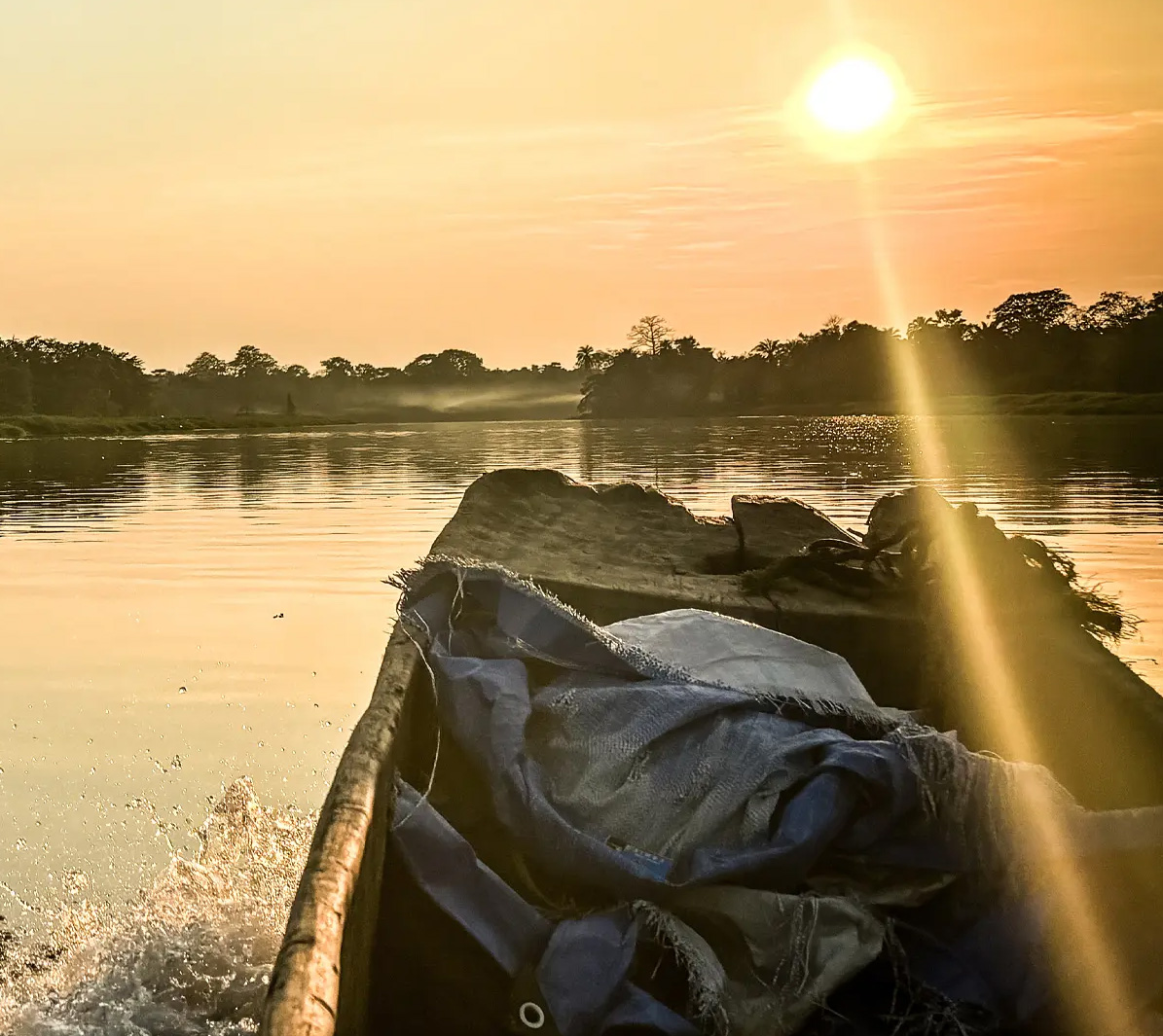
The Congo River is not simply a geographical feature. It is one of the country’s great transportation corridors and one of the most remarkable ways to experience the scale of the DRC.
River travel allows visitors to encounter communities and landscapes that cannot easily be reached by road.
But traveling on the river also requires serious planning.
River levels, vessel condition, fuel, schedules, currents and local access all matter.
For longer river expeditions, logistics should be arranged by teams familiar with the route rather than improvised after arrival.
Domestic Travel Can Be Part of the Expedition
- private 4×4 vehicles
- domestic flights
- motorboats
- larger river vessels
- motorcycles
- walking
- local transport
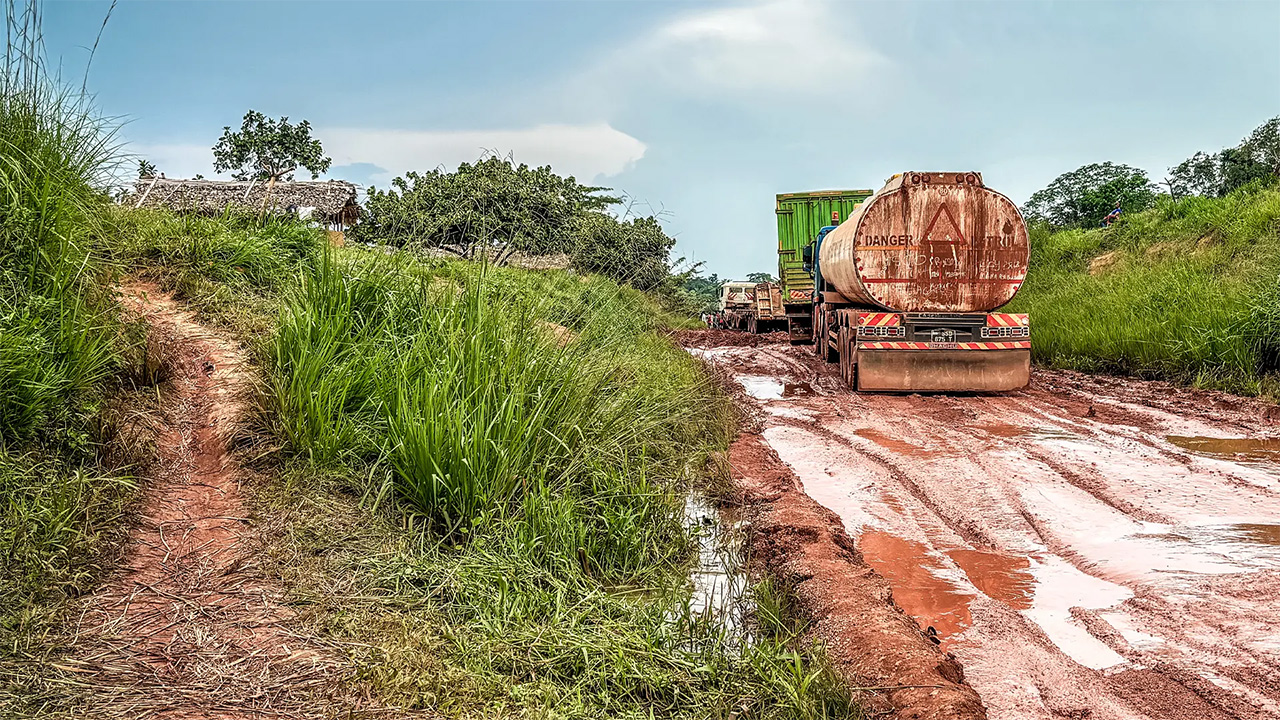
The FCDO notes that transport and accommodation outside Kinshasa and major towns can be extremely limited and recommends making arrangements in advance. It also notes that many roads are poorly maintained or unpaved and can become especially difficult during rainy periods.
This means that a distance of 200 kilometers does not necessarily translate into a two-hour drive. In some regions, the journey itself is a major part of the experience.
What Is the Best Time to Visit the DRC?
- road conditions
- river levels
- trekking
- access to remote areas
- travel times
- flight operations
For city-focused journeys, rain may cause inconvenience without fundamentally changing the trip. For remote expeditions, the season can have a much greater impact. Check the climate of the specific region rather than relying on a single “best time to visit Congo.”
Browse our Congo Destinations.
Health Preparation
- a personal first-aid kit
- necessary prescription medication
- mosquito protection
- sun protection
- hydration and electrolyte supplies
- medical evacuation coverage
Travel Insurance
- the Democratic Republic of Congo
- every province on your itinerary
- medical treatment
- emergency evacuation
- expedition or adventure activities
- trip interruption
- cancellation where required
Safety Is Regional
The security situation in the DRC cannot be summarized accurately with a single statement. Conditions differ dramatically from one region to another.
Some parts of the country are affected by active conflict or official warnings against travel, particularly areas of eastern DRC. Other parts of the DRC present a different set of challenges.
Travelers should therefore assess the exact route, not the country only at national level. Before departure:
- review current government travel advice
- confirm conditions with local contacts
- avoid demonstrations and political gatherings
- use trusted transport
- plan rural journeys during daylight where possible
Conditions should be reviewed again immediately before travel.
Mobile Phones and Internet
- downloading offline maps
- keeping important documents available offline
- carrying a power bank
- saving emergency contacts locally
- obtaining a local SIM or eSIM where appropriate
Money in the DRC
The Congolese franc is the national currency.
US dollars are also commonly used for certain larger transactions, particularly in tourism, hotels and some business contexts. Cash remains important.
Card payments and ATMs should not be assumed to be available everywhere, especially outside major cities.
Travelers should carry an appropriate mixture of payment options rather than relying entirely on one card.
When bringing US dollars, clean and relatively recent banknotes are often easier to use than damaged or heavily worn notes.
Languages
French is the country’s official language.
The DRC is also home to hundreds of local languages, with Lingala, Swahili, Tshiluba and Kikongo among the country’s major national languages.
Which language is most useful depends heavily on the region.
In Kinshasa, French and Lingala are widely used. Swahili is particularly important across much of eastern and southeastern DRC.
International visitors should not expect English to be widely spoken outside specific hotels, organizations or professional environments. A local guide or interpreter can therefore make a significant difference.
Photography and Cultural Respect
The DRC is extraordinarily photogenic, but photographing people should never be treated as an automatic right.
Ask permission before photographing individuals, particularly in villages, markets, religious environments or traditional ceremonies.
Some sites, infrastructure and official locations may also have restrictions on photography.
When in doubt, ask your guide or local contact first.
Good photography in the Congo depends as much on trust and relationships as it does on equipment.
What Kind of Accommodation Is Available?
Accommodation varies enormously.
Kinshasa and Lubumbashi have international-style and higher-end hotels.
Regional cities generally offer a smaller range of practical hotels and guesthouses.
Remote expeditions may involve very simple accommodation, local guesthouses, camps or other arrangements dictated by geography.
Travelers should understand accommodation standards before departure.
The further you travel beyond major cities, the more important flexibility becomes.
What Should You Pack?
- lightweight breathable clothing
- comfortable walking shoes
- rain protection
- insect repellent
- sun protection
- reusable water bottle
- personal medication
- power bank
- headlamp
- copies of important documents
- small daypack
Remote expeditions may require specialist equipment depending on the itinerary.
Choose the Right Kind of Journey
Not every visitor needs a major expedition.
Some travelers may want several days exploring Kinshasa or Lubumbashi.
Others want to spend weeks traveling along the Congo River, visiting remote regions or experiencing parts of the country few international visitors reach.
Think carefully about what you actually want from the journey.
Cities and culture
Start with destinations such as Kinshasa or Lubumbashi.
Remote cultural travel
Consider one of our cultural expeditions.
River travel
Explore a Congo River itinerary.
A tailor-made journey
A custom route can be developed around your interests and available time.
Planning a Journey to the DRC?
Congo Local Guides organizes specialist travel and expeditions throughout the Democratic Republic of Congo.
Our team combines local guides, field logistics, regional networks and international client support to develop journeys around real conditions on the ground.
Explore our Congo Expeditions, browse our Destinations, read our DRC Travel FAQ, or contact us to discuss a tailor-made journey.